
DOCTOR OF BUSINESS ADMINISTRATION
Elevate Your Leadership with Doctoral-Level Business Expertise
The DBA program is no longer accepting new students.
Estimated Annual Tuition: $10,982 (based on one academic year)

Choose Your Path to Advanced Expertise
International Business Administration: Master the complexities of global business environments, cultural implications, and international strategy for leading multinational organizations.
Marketing: Advance beyond fundamentals to focus on marketing management and marketing research, enhancing existing skills for effectively managing the product life cycle.
Strategic Management: Prepare for top leadership positions by developing analytical and strategic thinking skills essential for seeing the “big picture” and acting strategically.
Finance: Learn to manage and allocate financial resources for long-term profitability and organizational health in complex economic environments.
Program Structure:
The Doctor of Business Administration requires 61 graduate semester credits beyond the master’s degree:
- Core Courses: 30 credits
- Concentration Courses: 18 credits
- Dissertation Courses: 13 credits
Study Loads:
- Doctoral students enroll for six (6) units per semester including summer semester and remain in continuous enrollment until the degree is awarded.
Program Learning Outcomes:
After completing the DBA program, you will be able to:
- Critically analyze the scholarly literature and empirical evidence of the theories in each area of concentration.
- Demonstrate comprehensive knowledge of the theoretical/conceptual frameworks of the underlying disciplines of the business administration field
- Design and implement analytical/statistical data analysis techniques used in business
- Develop the skill sets required to extend the body of applied business administration knowledge to address practical business problems
- Produce original research by applying theoretical knowledge of specific business disciplines
- Employ, improve, and master advanced communication skills in sharing complex information, both orally and in writing using academic language
Core Courses:
- Organizational Theory and Corporate Governance
- Advanced Corporate Finance
- Advanced Marketing
- Modern Business-Driven Technologies
- International Sustainability
- Global Business Strategy
- Applied Statistics
- Organizational Change Management
- Strategic Human Resource Management
- Advanced Strategic Management
- View Full Curriculum
Admissions
- Minimum 3.0 GPA
- Master Transcripts and Graduation Certificate (Provisional and Final)
- Statement of Purpose
- Resume
- Three letters of recommendation
- Three years of combined teaching and/or professional work experience
We appreciate the commitment from veterans to protect our nation. Our goal is to provide excellent and quality higher education for veterans looking to continue their education.
The International Admissions Office is your comprehensive resource for program information, advice, and assistance in applying to CalMU. We understand the challenges international students face when choosing a college abroad. Our desire to provide a smooth process and to help you fulfill your educational goals.
| Course No. | Course Title | Credit Hour |
| BUS 7020 | Seminar in Organizational Theory and Corporate Governance | 3 |
| BUS 7040 | Seminar in Advanced Corporate Finance | 3 |
| BUS 7050 | Modern Business-Driven Technologies and E-commerce | 3 |
| BUS 7060 | International Sustainability and Social Responsibility | 3 |
| BUS 7070 | Globalization and Global Business Strategy | 3 |
| BUS 7080 | Applied Statistics (Grade of 80% or higher required to pass) | 3 |
| BUS 7090 | Organizational Change Management and Business Ethics | 3 |
| BUS 7100 | Seminar in Advanced Marketing | 3 |
| BUS 7110 | Strategic Human Resource Management | 3 |
| BUS 7130 | Seminar in Advanced Strategic Management (Grade of 80% or higher required to pass) | 3 |
| Course No. | Course Title | Credit Hour |
| BUS 8200A | DBA Competency Examination: Research Methods | 0 |
| BUS 8200B | DBA Competency Examination: Applied Statistics | 0 |
| BUS 8200C | DBA Competency Examination: Strategic Management | 0 |
| BUS 8210 | Business Research Methods (Initial Research Prospectus, Research Canvas) (Grade of 80% or higher required to pass) | 4 |
| BUS 8220 | Dissertation Process | 4 |
| BUS 8221 A-B | Dissertation Process Extension – if necessary * Repeatable | 3 |
| BUS 8230 | Dissertation Completion | 4 |
| BUS 8231 A-B | Dissertation Completion Extension – if necessary * Repeatable | 3 |
| BUS 8240 | Dissertation Defense and Degree Completion | 1 |
All DBA students who do not have an MBA or a Master’s degree in a business-related field may have to take some or all of these four foundation courses in Accounting, Operations Management, Finance, and Marketing if the University determines a student does not possess enough foundational knowledge in these areas to be successful in their DBA program at CMU. The following is a list of the 3 semester unit foundation courses that may be required:
|
Course No. |
Course Title | Credit Hour |
| ACC 6140 | Managerial Accounting | 3 |
| MGT 6170 | Operations Management | 3 |
| FIN 6160 | Managerial Finance | 3 |
| MKT 6120 | Marketing Management | 3 |
The lifeblood of every organization – private, public, religious or corporate – is its financial resources. Managers must know how to manage and allocate resources in order to ensure long-term profitability and organizational health. This concentration assists students with developing these essential skills.
FIN 7420: Investment Analysis and Portfolio Management (Prerequisite: 7040) (3 credit hours)
The focus of this course is on the financial theory and empirical evidence that are useful for investment decisions. The topics such as Financial Theories, Empirical Evidence in the Equity and Equity Options Markets, Fixed-Income and Credit Sensitive Instruments, Market Efficiency and Portfolio Management will be covered in this course.
FIN 7430: Financial Economics (Prerequisite: 7040) (3 credit hours)
This course focuses on application of economic principles to analyze financial markets. The course examines price fundamentals, models explaining asset pricing, and the implication of efficient markets and no-arbitrage.
FIN 7440: Financial Markets and Institutions (Prerequisite: 7040) (3 credit hours)
This course examines the nature, scope and role of financial institutions in the economy; supply of and demand for loanable funds; money market; capital markets; the level and structure of interest rates; monetary, fiscal and debt management policies. The course covers fundamental knowledge on the structure, function and role of the financial system in light of the web of links and interconnections with the banking sector. The course will cover financial intermediaries, financial instruments and the different markets where credit institutions are active players.
FIN 7460: Derivatives and Risk Management (Prerequisite: 7040) (3 credit hours)
This course focuses on financial derivatives, namely options, futures and swaps. The goal is to provide a complete overview of the main characteristics of these securities and pricing and hedging issues, from the point of view of the investment bank or large investor. The topics that cover risk management are: Risk assessment, Controlling risk, Quantifying financial risks, Financial methods for measuring risk, Qualitative approaches to risk assessment.
FIN 7470: Seminar in International Finance (Prerequisite: 7040) (3 credit hours)
This course will focus on decision making in an international context. It covers major topics in international financial markets. The course will cover topics such as foreign exchange markets, spot exchange rate, forward exchange rate, currency futures, options, balance of payments, international monetary system, purchasing power parity and interest rate parity.
FIN 7490: Seminar in Valuation, Mergers and Acquisitions (Prerequisite: 7040) (3 credit hours)
This course will focus on the increasingly dynamic trends in the global marketplace that have caused multinational firms to structure complex mergers and alliances, all with the goal of enhancing shareholder value. Many of these transactions fail to achieve their potential. The course will evaluate the strategic implications and tactical aspects of mergers, acquisitions, and alliances. Topics covered include the role of the board of directors and senior management in identifying new opportunities to increase shareholder value; valuation methodologies (both quantitative and qualitative); deal structure; due diligence; corporate governance; legal, tax, regulatory, organizational, and environmental planning.
BUS 7001-FIN: Business Administration Career Practical Training (3 credit hours) Repeatable in BUS 7002 or BUS 7003 (1 credit hour)
This course is an elective externship course. This course of 3 semester units requires 135 hours of externship in the eight-week session.
This course may be repeated, however, only the first 3 semester credits count toward the required units required for graduation. The course is designed to give the student practical On-The-Job experience in the directed area of Business Administration. The course presents an opportunity for student to apply and practice their knowledge and skills they have learned in their degree program and further develop their passion for their chosen industry in a real-world setting.
The Marketing concentration moves beyond fundamentals by focusing upon marketing management and marketing research. The courses provide students the opportunity to enhance existing skills and knowledge and to gain new skills and knowledge germane to effectively managing the entire scope of the product life cycle in a strategically-sound, systematic, ethical, and legal manner.
MKT 7310: Advanced International Marketing (Prerequisite: BUS 7100) (3 credit hours)
This course exposes to several aspects of global marketing. This includes the international marketing environment and the international marketing mix—product, pricing, distribution, promotion—as well as emerging issues in international trade such as trading blocs, trade barriers, and standardization/adaptation.
MKT 7320: Seminar in Consumer Behavior (Prerequisite: 7040) (3 credit hours)
This seminar course provides an in-depth study of the nature and determinants of the behavior of organizations in relation to their marketing activities. This course will emphasize the cognitive processing perspectives of decision making within ethical marketing both locally and internationally. Students will also gain experience in comprehensively surveying the literature in subject areas such as memory, attitudes, perceptions, preferences, and buyer/seller behavior.
The seminars will focus on practical, professional decision making incorporating the challenges faced by marketers who must balance the needs of customers, suppliers, shareholders, employees, and other stakeholders. The course requires the student to synthesize and integrate theory and practice and to apply them toward the development of innovative and creative solutions for specific marketing situations found within an organization’s environment both locally and in the global environment.
MKT 7330: Strategic Marketing (Prerequisite: 7040) (3 credit hours)
This course focuses on marketing theory development, organizational behavior theory, innovation theory, and research to examine substantive areas in marketing. It examines the development of marketing strategies that can be adapted to the changing needs of consumers, to the strategies of competitors, and to the globalization of commerce.
Other topic areas include: segmentation, strategy, advertising, promotion, pricing, product development and management, distribution channels, sales force, relationship marketing, new product introduction, marketing across sectors, and retailing. In this course, strategic management concepts as they relate to for-profit, not-for-profit and professional organizations will be examined to enhance the student’s ability to analyze an industry and develop relevant ethical marketing strategies.
As such, this course is designed to offer exposure to the substantive issues that marketing theoreticians are grappling with and an opportunity to delve more deeply into one or more areas of special interest.
MKT 7340: Advanced Analytical Marketing Research (Prerequisite: 7040) (3 credit hours)
The focus of this course is to develop an awareness and understanding of the various information sources and techniques for gathering and analyzing marketing data that can reduce the uncertainty and increase the profitability of marketing decisions.
The course will address the data collection and data analysis. Special emphasis will be given to problem definition, data collection methods, research design, statistical analysis and interpretation of results.
MKT 7350: Marketing Communications and Experiential Marketing (Prerequisite: 7040) (3 credit hours)
This course provides students with an understanding of the process of developing and managing an integrated marketing communication campaign for a product or service.
The course provides students with allows students to prepares students to present and manage an integrated marketing communications plan using a blend of advertising, personal selling, sales promotion, public relations, direct marketing, Internet techniques and related marketing tools. Through case studies and practical exercises, you will learn how to reach appropriate market targets in the most cost-efficient and measurable way. The course employs a mix of case discussions and lectures/class discussions.
MKT 7360: Pricing Theory and Practices (Prerequisite: 7040) (3 credit hours)
This course focuses on strategic and tactical aspects of pricing decisions for products and services. The course is quantitative in nature and takes into consideration the role of consumer behavior, economics, statistics, and management science in determining pricing policies.
BUS 7001-MKT: Business Administration Career Practical Training (3 credit hours) Repeatable in BUS 7002 or BUS 7003 (1 credit hour)
This course is an elective externship course. This course of 3 semester units requires 135 hours of externship in the eight-week session.
This course may be repeated, however, only the first 3 semester credits count toward the required units required for graduation. The course is designed to give the student practical On-The-Job experience in the directed area of Business Administration. The course presents an opportunity for student to apply and practice their knowledge and skills they have learned in their degree program and further develop their passion for their chosen industry in a real-world setting.
The “global economy” requires that domestic and foreign business managers have the knowledge of cultural, economic, political and legal environments of business and the necessary managerial skills for making management decisions in an international context. This specialization focuses on the essential elements required to understand and manage international organizations.
IBA 7510: Seminar in International Business (3 credit hours)
This course focuses on strategic planning and international business policy using extensive reading and cases in the global business field, which includes insights into the historical, cultural, and political foundations that created problems and opportunities and the solutions and courses of action taken in response. The course focuses on the environmental complexities that arise when business activities and institutions transcend international borders.
FIN 7470: Seminar in International Finance (Prerequisite: 7040) (3 credit hours)
This course will focus on decision making in an international context. It covers major topics in international financial markets. The course will cover topics such as foreign exchange markets, spot exchange rate, forward exchange rate, currency futures, options, balance of payments, international monetary system, purchasing power parity and interest rate parity.
MKT 7310: Advanced International Marketing (Prerequisite: 7040) (3 credit hours)
This course exposes to several aspects of global marketing. This includes the international marketing environment and the international marketing mix—product, pricing, distribution, promotion—and emerging issues in international trade such as trading blocs, trade barriers, and standardization/adaptation.
IBA 7520: International Accounting (Prerequisite: 7040) (3 credit hours)
This course introduces and examines accounting issues unique to multinational enterprises and international business activity. Specific course topics include auditing the global firm; financial reporting outside the USA; international financial disclosure issues such as segmental social, and environmental; accounting harmonization; ethics; taxation; foreign exchange; and cultural issues.
HRM 7530: International Human Resource Management (Prerequisite: 7040) (3 credit hours)
This course examines the management of people in organizations across different countries and cultures. Its primary aim is to examine the roles and functions of the various HRM activities within an international context. The course provides an overview of the comparative and human resource management issues associated with conducting international business operations.
IBA 7540: International Business Law and Practices (Prerequisite: 7040) (3 credit hours)
This course covers the principles underlying the legal environment of global business. In addition to identifying the current legal rules and regulations affecting businesses, this course presents insights into new developments and trends that will greatly affect future transactions on a global scale.
BUS 7001-INT: Business Administration Career Practical Training (3 credit hours) Repeatable in BUS 7002 or BUS 7003 (1 credit hour)
This course is an elective externship course. This course of 3 semester units requires 135 hours of externship in the eight-week session.
This course may be repeated, however, only the first 3 semester credits count toward the required units required 61 semester units required for graduation. The course is designed to give the student practical On-The-Job experience in the directed area of Business Administration. The course presents an opportunity for student to apply and practice their knowledge and skills they have learned in their degree program and further develop their passion for their chosen industry in a real-world setting.
This concentration prepares individuals who seek top leadership positions in business or who seek to be valued consultants to businesses and other organizations. Prospective top leaders and consultants must prepare themselves to see and evaluate the “big picture” and think and act “strategically.” Leaders develop analytical and strategic thinking skills early in their careers. Consultants engage in problems solving with their client firms, always with an understanding of the strategic implications of what they are doing, and ultimately help firms develop and implement strategies.
MGT 7610: Seminar in Strategy and Competitive Advantage (3 credit hours)
This course concentrates on strategy issues at the business unit level. Its focus is on the question of how firms can create and sustain a competitive advantage. A central part of the course deals with new concepts that have been developed around the notions of complementarities and fit. Other topics covered in the course include the creation of competitive advantage through commitment, competitor analysis, real options, modularity, and increasing returns.
MGT 7620: Technology and Innovation Strategy (3 credit hours)
This course emphasizes how the future manager or entrepreneur can use strategic management of innovation and technology to enhance firm performance.The course is designed to meet the needs of future managers, entrepreneurs, bankers, or consultants who must understand the interactive role of technology and organization to derive competitive advantage.
MGT 7630: International Strategy Formulation and Execution (3 credit hours)
This strategy course addresses how to assess the performance of a business, what determines performance, how to conduct a strategic audit and how to develop a specific course of action to deal with strategic issues. The opportunity to enhance value by aligning strategy and organizational infrastructure is analyzed. The ability to implement change to enhance competitiveness is examined.Participants develop general management abilities by integrating prior knowledge and skills acquired in previous courses and ‘pulling it all together’ in the process of strategy formulation and strategic choice.
MGT 7640: Strategic Decision Making (MCDM, DSS, ES) (3 credit hours)
This course will examine how decisions are made in strategic settings, that is, scenarios where the wellbeing of a person depends not only on his/her own actions but also on those of others he/she is interacting with. In deciding on his/her actions, a person has to either predict the actions of others or he/she has to take account of actions they have already taken.The theory of strategic behavior (‘game theory’) to be developed in this course has truly enormous scope for applicability. It can be applied to scenarios in history, economics, psychology, business, sociology, anthropology, military conflict, and biology.This course will provide a framework to think systematically about questions in these diverse areas. The goal is to enable students to make sense of the many events, institutions, social norms, government actions, and patterns of individual behavior that we observe in past and present societies.
MGT 7650: Organization Theory: A Strategic Approach (3 credit hours)
This course provides a strategic, applied approach to organization theory that emphasizes decision-making.The course presents a balance of theory, research, and practice and focuses on how students can use their knowledge of organization theory to be better managers and organization members.
MGT 7660: Strategic Management of Nonprofit Organizations (3 credit hours)
This is course to introduce students to strategic management issues in the nonprofit sector. The course will cover key issues in founding, leading, managing, and governing nonprofit organizations and new nonprofit ventures, including organizational mission, strategic analysis and planning, board governance, multiple constituencies, partnerships and collaborations, human resources, financial management, fundraising and resource development, and performance measurement and impact.
BUS 7001-MGT: Business Administration Career Practical Training (3 credit hours) Repeatable in BUS 7002 or BUS 7003 (1 credit hour)
This course is an elective externship course. This course of 3 semester units requires 135 hours of externship in the eight-week session.
This course may be repeated, however, only the first 3 semester credits count toward the required units required for graduation. The course is designed to give the student practical On-The-Job experience in the directed area of Business Administration. The course presents an opportunity for student to apply and practice their knowledge and skills they have learned in their degree program and further develop their passion for their chosen industry in a real-world setting.




Program Locations

San Diego

Know More
Program Overview
Leadership-Driven Curriculum
Our DBA program is crafted to develop strategic, decisive leaders equipped to thrive in today’s fast-paced, global business environment.
Theory Meets Real-World Practice
Students gain a powerful mix of academic insight and practical application, preparing them to lead with confidence and clarity.
Designed for Busy Professionals
Flexible and accessible, our DBA program fits around work and life—empowering professionals and parents to achieve their goals without compromise.
Ready for Complex Global Challenges
The program tackles issues like economic shifts, rapid tech evolution, workforce diversity, and global structural change—giving students the tools to navigate it all.
Advance your career!
Up skill your career with technical as well as business knowledge for today’s world.
The Doctoral Research Experience
The dissertation process includes:
- Three competency exams (Research Methodology, Applied Statistics, and Strategic Management)
- Research prospectus development
- Dissertation process and proposal defense
- Data collection and analysis
- Dissertation completion and final defense
Students must pass all competency exams no later than five years from their admission and before embarking on the compilation of their dissertation.
The dissertation represents the summation of your work at California Miramar University and provides tangible evidence of your readiness for executive roles and academic contributions.
Must be original research in the context of Business (including topics in International Business Administration, Marketing, Strategic Management and Finance)
Adds new knowledge to the field
Focuses on current business issues
Demonstrates your ability to conduct independent research
Applies theoretical knowledge to solve complex business problems
Admission Requirements
- Completed master's degree from a nationally or regionally accredited college or university with minimum 3.0 GPA
- Official academic transcripts
- Minimum of 30 hours of graduate coursework in a business-related field
- Three years of combined teaching and/or professional work experience
- Statement of purpose (minimum 1000 words) including research interests
- Personal interview with the DBA Program Director
- Computer capability and access as specified by the DBA Director
- International students must meet English proficiency requirements
Prerequisite Courses (if required):
- Principles of Accounting I
- Financial Management
- Principles of Microeconomics
- Marketing Management

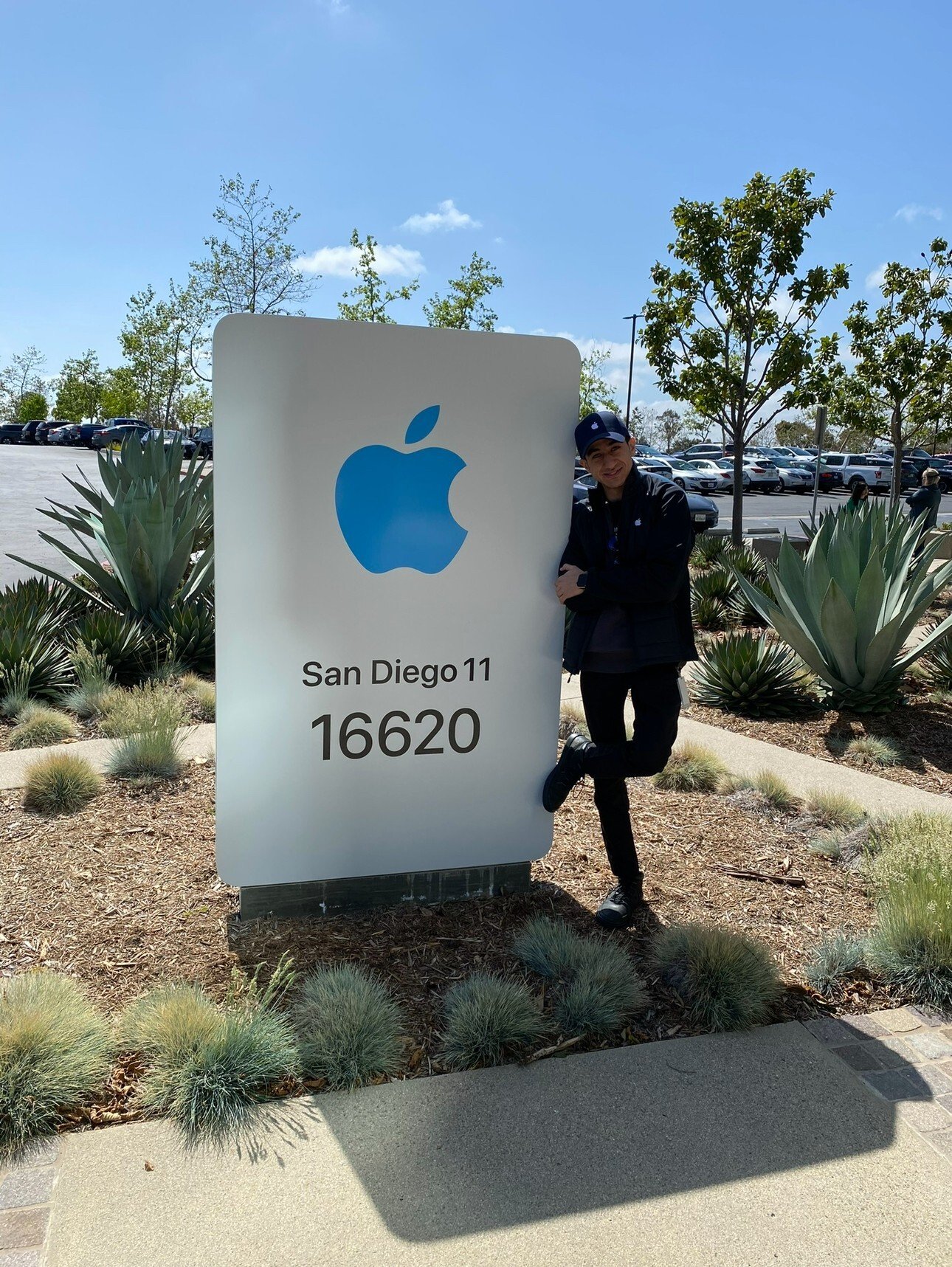
I want to thank everyone working in this school — professors and staff, they are all great and they always go above and beyond to support their students and helped me land my dream job at Apple.
— Ali Radwan, Egypt – Class of 2018 (BBA) and 2021 (MSCIS)
OPT Opportunities
Increase your eligibility
to work in the US
Not only does this program increase your employability worldwide, but you can also be eligible for up to three years of post-graduation work authorization (OPT) in the US. You must study in the US for the full year of your MBA and go on to work in a STEM finance-related field. Non-STEM graduates are only eligible for a maximum of one year OPT in the US.

Number of nationalities that have been a part of the CalMU family.

Companies hired CalMU 2024 graduates.
For Military Students
Dedicated advisors familiar with military educational requirements
Evaluation process for relevant military training
Accommodating class schedules and learning options
For Transfer Students
Transfer up to 18 credits
Prior learning assessments
Accelerated path to completion
Seamless transition to Master's programs
Transfer Credits Easily
Our admissions team will work with you to ensure you get credit for what you already know, so you can focus on what you need to learn.
Frequently Asked Questions
Program Basics
Upon successful completion of the program, you will earn an Associate of Science in Business Administration (ASBA) from California Miramar University.
The ASBA program requires 60 credit hours.
The standard program duration is 2 years, though it can be completed in as little as 24 months, even while working full-time.
We offer flexible classes designed for your busy schedule, including:
- Online options
- Hybrid formats
- Multiple start dates throughout the year
Our locations include:
- San Diego
- La Puente
- San Jose
Admission Requirements
To be considered for admission to the BSBA program, you need:
- High school diploma or equivalent with minimum 2.0 GPA
- Official academic transcripts
- English proficiency (for non-native speakers)
- Principles of Accounting I
- Principles of Microeconomics
- Financial Management
- Business Statistics
Curriculum and Learning
● Seminar in Organizational Theory and Corporate Governance
● Seminar in Advanced Corporate Finance
● Modern Business-Driven Technologies and E-commerce
● International Sustainability and Social Responsibility
● Globalization and Global Business Strategy
● Applied Statistics
● Organizational Change Management and Business Ethics
● Seminar in Advanced Marketing
● Strategic Human Resource Management
● Seminar in Advanced Strategic Management
● International Business Administration
● Marketing
● Strategic Management
● Finance
The dissertation process includes:
● Completing three competency exams
● Developing a research prospectus
● Defending a dissertation proposal
● Conducting original research
● Analyzing data and drawing conclusions
● Defending the final dissertation
● Publishing the approved dissertation
Future Enrollment Opportunities
The date for reopening enrollment has not been determined. You can join our interest list to receive updates when the program reopens.
● Reviewing the program requirements
● Ensuring you meet the admission criteria
● Gathering necessary documentation
● Joining our interest list for updates
● Speaking with an admissions advisor about your goals
.png?width=120&height=120&name=MILITARY-SMART%20UNIVERSITY%20(27).png "MILITARY-SMART UNIVERSITY (27)")
Transform your career with skills employers demand!
Our graduates don’t just earn degrees—they land opportunities. Applications for our Summer and Fall 2026 programs are now being accepted.
Limited enrollment to ensure personalized attention and optimal learning outcomes.*
Download Brochure
Download a brochure for an in-depth look at CalMU undergraduate degree programs.
Upcoming Deadlines
We offer spring and fall start dates for our most popular programs.
Summer 2 Enrollment Deadline: June 26, 2026
Fall 1 Enrollment Deadline: August 28, 2026
Contact Us
Our team of advisors is ready to answer your questions, so if you’d like to talk to an enrollment director, please contact us.